Thursday, February 23, 2006

In the company of legends

(By Dr.Yonnas Gondemo, Ethiopian Politics Contributor)

Today February 23, 2006 Ethiopia's opposition leaders, journalists and human rights activists have gone on trial for treason and attempted genocide - marking yet another sad day in Ethiopia’s recent History that will live forever in infamy.

On a day such as this, it is important to remember history’s giants who in their time were also persecuted for their beliefs in human rights and political freedom. We have compiled excerpts of two famous speeches. The first excerpt is from a speech given by a living legend renowned for his steadfast determination: and the second by an icon whose name is synonymous with peaceful resistance. We hope these speeches will give strength and sustenance to all in the struggle for freedom, justice and everlasting peace in Ethiopia.
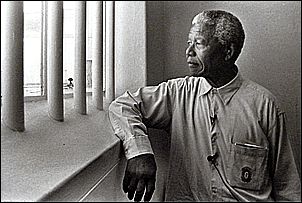


At the opening of the defense case in the Rivonia Trial, Nelson Mandela gave his famous "I am prepared to die" speech. At the conclusion of the trial, June 1964: Mandela and seven others - Walter Sisulu, Govan Mbeki, Raymond Mhlaba, Elias Motsoaledi, Andrew Mlangeni, Ahmed Kathrada and Denis Goldberg - were convicted. Mandela was found guilty on four charges of sabotage and like the others was sentenced to life imprisonment.

Here’s an excerpt of the speech:

“Above all, we want equal political rights, because without them our disabilities will be permanent. I know this sounds revolutionary to the whites in this country, because the majority of voters will be Africans. This makes the white man fear democracy.

But this fear cannot be allowed to stand in the way of the only solution which will guarantee racial harmony and freedom for all. It is not true that the enfranchisement of all will result in racial domination. Political division, based on color, is entirely artificial and, when it disappears, so will the domination of one color group by another. The ANC has spent half a century fighting against racialism. When it triumphs it will not change that policy.

This then is what the ANC is fighting. Their struggle is a truly national one. It is a struggle of the African people, inspired by their own suffering and their own experience. It is a struggle for the right to live.

During my lifetime I have dedicated myself to this struggle of the African people. I have fought against white domination, and I have fought against black domination. I have cherished the ideal of a democratic and free society in which all persons live together in harmony and with equal opportunities. It is an ideal which I hope to live for and to achieve. But if needs be, it is an ideal for which I am prepared to die.”

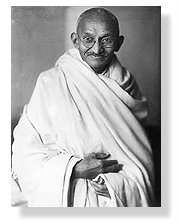
Mahatma Gandhi’s trial by the British, known as “the great trial” was held on Saturday, 18th of March 1922. At the conclusion of the trial Gandhi was sentenced to six years in prison but only served about two years of the sentence and was released on February 1924.

Here’s an excerpt from Mohandas Karamchand Gandhi’s trial statement of 1922:

“In my opinion, non-co-operation with evil is as much a duty as is co-operation with good. But in the past, non-co-operation has been deliberately expressed in violence to the evil-doer. I am endeavoring to show to my countrymen that violent non-co-operation only multiples evil, and that as evil can only be sustained by violence, withdrawal of support of evil requires complete abstention from violence.

Non-violence implies voluntary submission to the penalty for non-co-operation with evil. I am here, therefore, to invite and submit cheerfully to the highest penalty that can be inflicted upon me for what in law is deliberate crime, and what appears to me to be the highest duty of a citizen.

The only course open to you, the Judge and the assessors, is either to resign your posts and thus dissociate yourselves from evil, if you feel that the law you are called upon to administer is an evil, and that in reality I am innocent, or to inflict on me the severest penalty, if you believe that the system and the law you are assisting to administer are good for the people of this country, and that my activity is, therefore, injurious to the common weal.”

Let us conclude with a quote that captures the true essence of Ethiopia’s struggle for democracy and economic independence.

"For us democracy is a question of human dignity. And human dignity is political freedom, the right to freely express opinion and the right to be allowed to criticise and form opinions. Human dignity is the right to health, work, education and social welfare. Human dignity is the right and the practical possibility to shape the future with others. These rights, the rights of democracy, are not reserved for a select group within society; they are the rights of all the people."

--Olof Palme, the late Swedish Prime Minister

In the company of legends

(By Dr.Yonnas Gondemo, Ethiopian Politics Contributor)

Today February 23, 2006 Ethiopia's opposition leaders, journalists and human rights activists have gone on trial for treason and attempted genocide - marking yet another sad day in Ethiopia’s recent History that will live forever in infamy.

On a day such as this, it is important to remember history’s giants who in their time were also persecuted for their beliefs in human rights and political freedom. We have compiled excerpts of two famous speeches. The first excerpt is from a speech given by a living legend renowned for his steadfast determination: and the second by an icon whose name is synonymous with peaceful resistance. We hope these speeches will give strength and sustenance to all in the struggle for freedom, justice and everlasting peace in Ethiopia.


At the opening of the defense case in the Rivonia Trial, Nelson Mandela gave his famous "I am prepared to die" speech. At the conclusion of the trial, June 1964: Mandela and seven others - Walter Sisulu, Govan Mbeki, Raymond Mhlaba, Elias Motsoaledi, Andrew Mlangeni, Ahmed Kathrada and Denis Goldberg - were convicted. Mandela was found guilty on four charges of sabotage and like the others was sentenced to life imprisonment.

Here’s an excerpt of the speech:

“Above all, we want equal political rights, because without them our disabilities will be permanent. I know this sounds revolutionary to the whites in this country, because the majority of voters will be Africans. This makes the white man fear democracy.

But this fear cannot be allowed to stand in the way of the only solution which will guarantee racial harmony and freedom for all. It is not true that the enfranchisement of all will result in racial domination. Political division, based on color, is entirely artificial and, when it disappears, so will the domination of one color group by another. The ANC has spent half a century fighting against racialism. When it triumphs it will not change that policy.

This then is what the ANC is fighting. Their struggle is a truly national one. It is a struggle of the African people, inspired by their own suffering and their own experience. It is a struggle for the right to live.

During my lifetime I have dedicated myself to this struggle of the African people. I have fought against white domination, and I have fought against black domination. I have cherished the ideal of a democratic and free society in which all persons live together in harmony and with equal opportunities. It is an ideal which I hope to live for and to achieve. But if needs be, it is an ideal for which I am prepared to die.”

Mahatma Gandhi’s trial by the British, known as “the great trial” was held on Saturday, 18th of March 1922. At the conclusion of the trial Gandhi was sentenced to six years in prison but only served about two years of the sentence and was released on February 1924.

Here’s an excerpt from Mohandas Karamchand Gandhi’s trial statement of 1922:

“In my opinion, non-co-operation with evil is as much a duty as is co-operation with good. But in the past, non-co-operation has been deliberately expressed in violence to the evil-doer. I am endeavoring to show to my countrymen that violent non-co-operation only multiples evil, and that as evil can only be sustained by violence, withdrawal of support of evil requires complete abstention from violence.

Non-violence implies voluntary submission to the penalty for non-co-operation with evil. I am here, therefore, to invite and submit cheerfully to the highest penalty that can be inflicted upon me for what in law is deliberate crime, and what appears to me to be the highest duty of a citizen.

The only course open to you, the Judge and the assessors, is either to resign your posts and thus dissociate yourselves from evil, if you feel that the law you are called upon to administer is an evil, and that in reality I am innocent, or to inflict on me the severest penalty, if you believe that the system and the law you are assisting to administer are good for the people of this country, and that my activity is, therefore, injurious to the common weal.”

Let us conclude with a quote that captures the true essence of Ethiopia’s struggle for democracy and economic independence.

"For us democracy is a question of human dignity. And human dignity is political freedom, the right to freely express opinion and the right to be allowed to criticise and form opinions. Human dignity is the right to health, work, education and social welfare. Human dignity is the right and the practical possibility to shape the future with others. These rights, the rights of democracy, are not reserved for a select group within society; they are the rights of all the people."

--Olof Palme, the late Swedish Prime Minister

Monday, February 20, 2006

Mengistu unleashed in Zimbabwe

The former military ruler of Ethiopia, Ex-dictator Mengistu Halilemariam, has not been sitting idly waiting for time to take its course. New allegations are surfacing that accuse the colonel of dabbling in Zim. politics. A Zimbabwean news service is reporting it has acquired evidence that proves Mengistu was the brains behind a recent controversial “clean-up” campaign that left millions homeless. According to ZimOnline, mengistu has been Mugabe's security adviser for quite sometime.

Here’s an excerpt from the article

“(Mengistu) first suggested the slum clearance idea to Mugabe in February, at one of the regular meetings he holds with the president and other senior security chiefs from the army, the CIO and the police………………. Other meetings chaired by Mengistu followed, during which video clippings of Zimbabwe's 1998 food riots, as well as footage of mass uprisings in the Ukraine, Yugoslavia and Ethiopia, were shown to the group, which called itself Operation Murambatsvina's "high command"…………………… Mengistu then prepared a final document on the operation, which he submitted to Mugabe. The president endorsed it. Operation Murambatsvina, according to the plan, was to be implemented in phases, starting with flea markets suspected of fuelling economic crimes, mainly illegal foreign-currency trade."

To read the article in its entirety click here.